15 September 2026
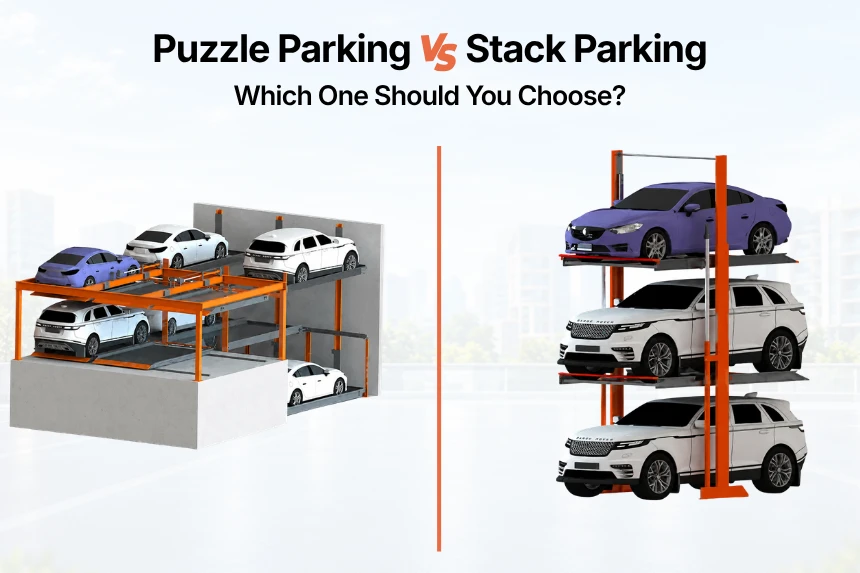
Puzzle Parking vs Stack Parking: Which One Should You Choose?
Both systems park more cars in the same space. Only one lets every owner drive out without waiting for a neighbour. Here is the full comparison for Indian buildings — access, capacity, cost, site requirements and a clear rule for picking one.
The short answer
In puzzle parking vs stack parking, the difference is access. A stack parking system lifts one car above another, so the lower car must move before the upper one can come down. A puzzle parking system moves pallets sideways as well as up, so any car can be taken out on its own. Stack parking costs less and suits one family or one user per bay. Puzzle parking suits buildings where every car has a different owner.
Key takeaways
- Access is the real difference. Stack parking is dependent. Puzzle parking is independent.
- Capacity: stack parking holds 2–3 cars per bay. Puzzle parking runs 2 to 5 levels and fits about 3× the cars of open parking.
- Cost: stack parking is the cheaper system per car. Puzzle parking costs more because it needs more motors, a steel grid and a controller.
- Site: stack parking needs headroom. Puzzle parking often needs a pit, a podium or a basement.
- The rule: if one person owns both cars in a bay, stack parking works. If two different flats own them, choose puzzle parking.
- Mixed projects are normal. Many Indian buildings use puzzle parking for residents and stack parking for staff or a second family car.
What is the difference between stack and puzzle parking?
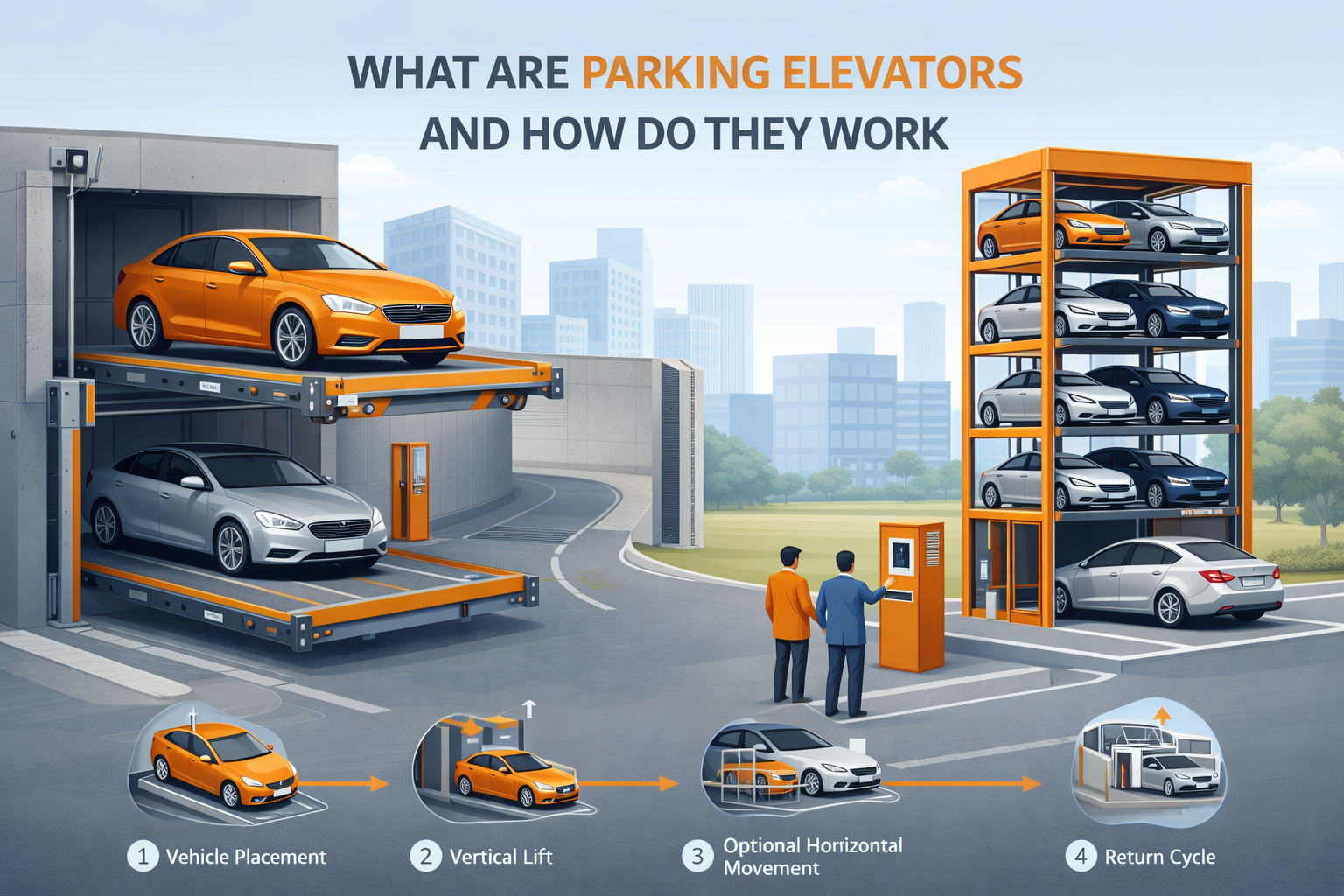
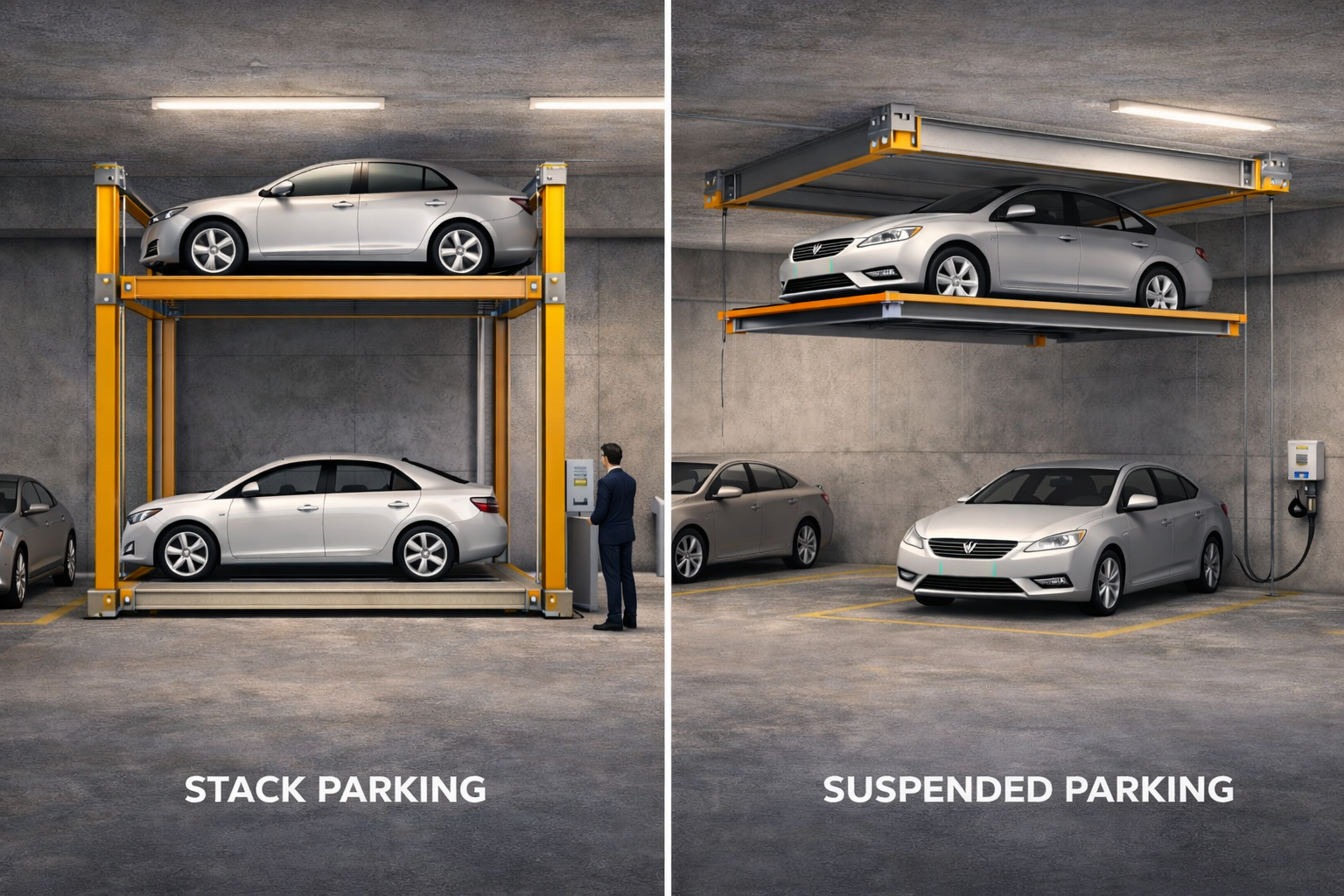
The difference between stack and puzzle parking is how the platforms move. Stack parking moves a car only up and down. Puzzle parking moves pallets up, down and sideways. That one extra direction is what lets the puzzle grid pull out any car without touching the others.
Vertical only
One car is lifted, another parks underneath. To bring the top car down, the bottom car has to move out first.
Vertical and sideways
Each car sits on its own pallet. The system slides empty pallets across to open a path, then lowers the car you asked for.
Everything else — cost, capacity, civil work, maintenance — follows from this one point.
Stack parking vs puzzle parking: side-by-side
This is the puzzle parking vs stack parking comparison in full, on the points that decide most Indian projects.
| What you are comparing | Stack parking | Puzzle parking |
|---|---|---|
| How cars move | Up and down only | Up, down and sideways |
| Access type | Dependent | Independent |
| Levels | 2 or 3 | 2 to 5 |
| Cars per footprint | 2–3× open parking | About 3× open parking, more on taller grids |
| Who moves the car | Driver, with a push-button control | The system, from a controller or card |
| Getting a car out | Quick, but only after the car below moves | One command, no other car moves |
| Civil work | Light. Often just a level slab and headroom | Heavier. Usually a pit, podium or basement |
| Best user | One family or one user per bay | Different owners in every slot |
| Relative cost per car | Lower | Higher |
| Moving parts | Few. Hydraulic or electro-mechanical lift | More. Motors, chains, sensors and a PLC |
| Maintenance | Simple, low-cost AMC | Regular AMC, more parts to service |
| In a power cut | Cars stay locked on mechanical safety locks | Cars stay locked on pallets; retrieval waits for power |
Scroll the table sideways on a phone to see both columns.
What is a stack parking system?
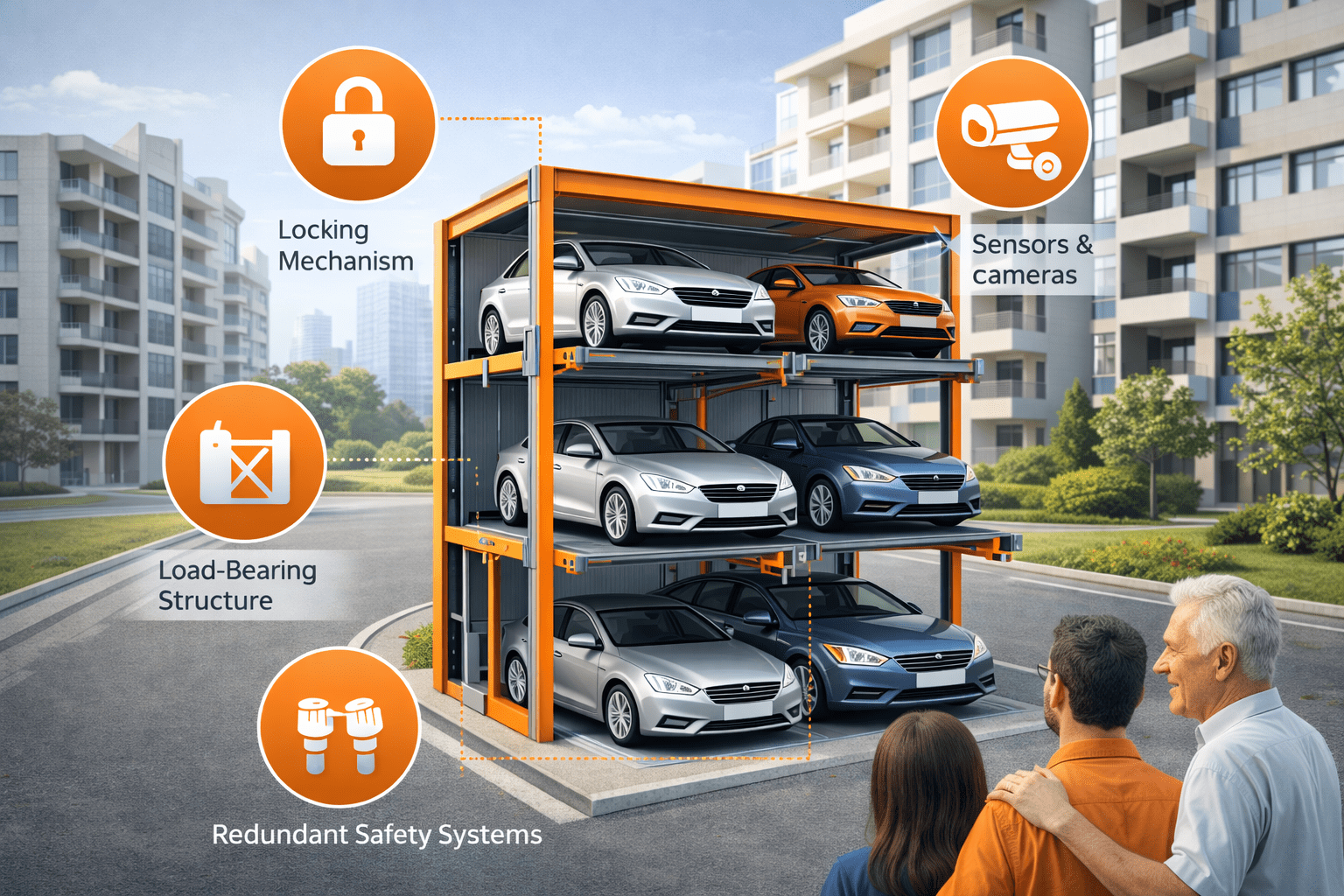
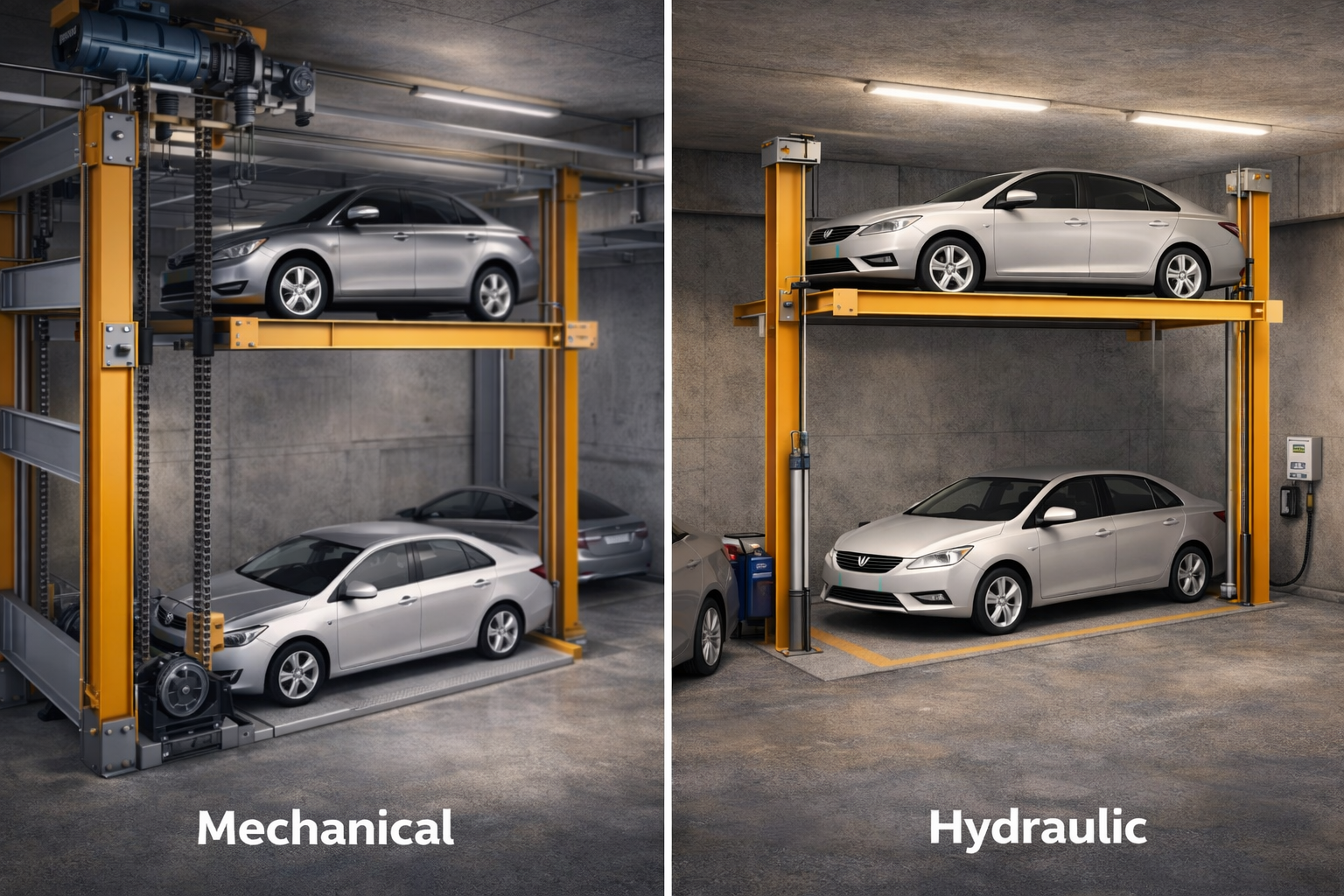
A stack parking system parks cars one above another on a lifting platform. A hydraulic or electro-mechanical unit raises the upper car, and a second car parks in the space underneath. Safety locks hold the platform at every level.
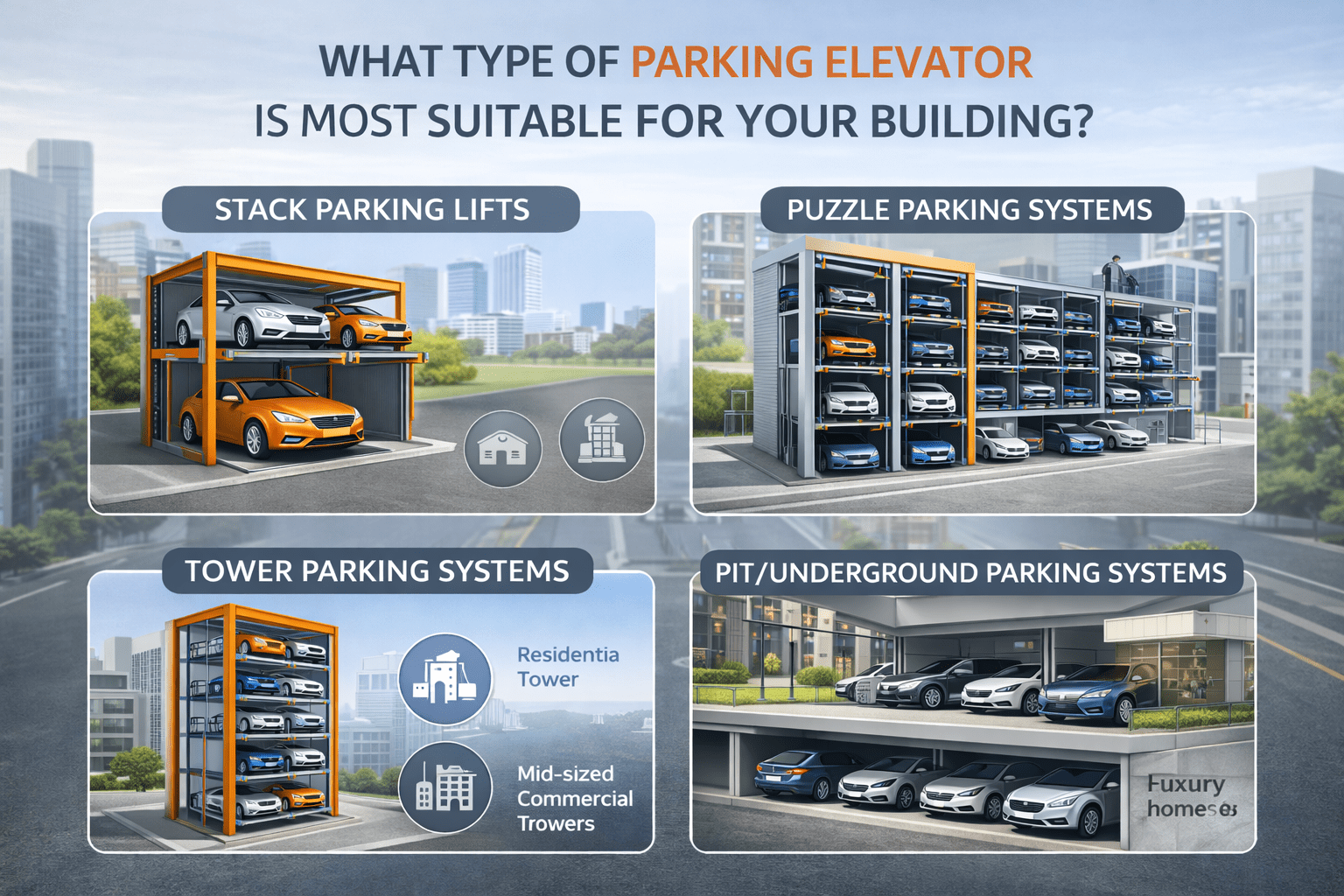
It is the simplest mechanical parking system sold in India, and the cheapest way to double a parking bay. i-CUBE builds it in 2-post and 4-post versions, in 2-level and 3-level heights, with load ratings of 2,000 kg, 2,500 kg and 3,000 kg so sedans and SUVs both fit.
- 2-post, 2-level — the entry-level unit. Doubles one bay.
- 2-post, 3-level — triples one bay where the roof is high enough.
- 4-post, 2-level — self-supporting, steadier, good for uneven slabs.
- 4-post, 3-level — the heavy-duty option for maximum capacity.
Read the full specification on the stack parking system page.
What is a puzzle parking system?
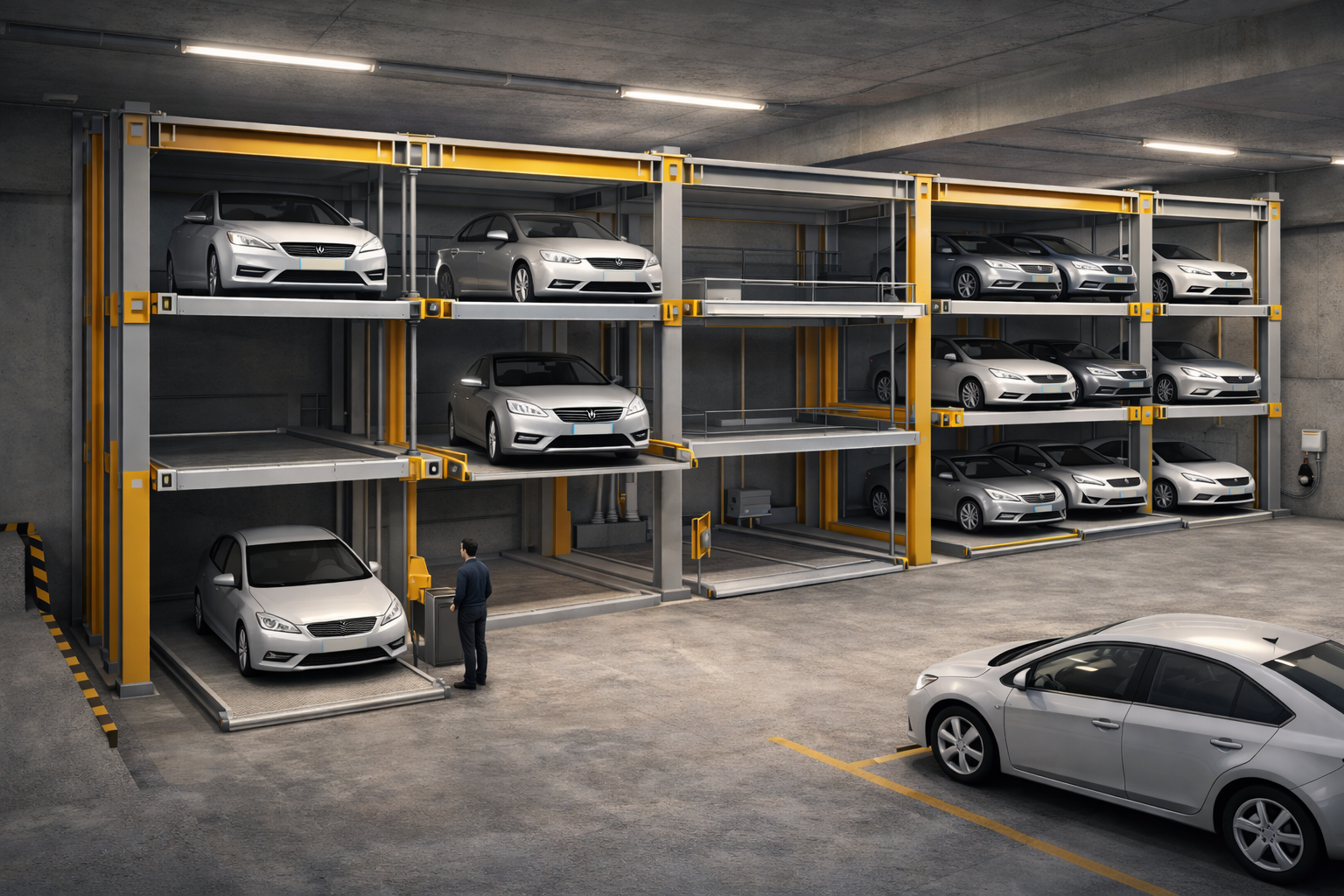
A puzzle parking system is a semi-automatic parking system where every car sits on its own steel pallet. The pallets slide sideways and lift vertically, like the tiles in a sliding puzzle. A PLC (the small computer that controls the machine) works out which pallets to move and in what order.
Because it can open a path to any pallet, the driver never has to move someone else’s car. i-CUBE builds puzzle parking in 2 to 5 levels, above ground, in a pit, or as a hybrid of both for awkward sites.
- 2 level — G+1, fits under most stilts and society parking.
- Multilevel — G+2 to G+5, for basements and podiums.
- 2 or 3 level pit — the top deck sits flush with the plinth where height is restricted.
- Hybrid — above-ground levels combined with a pit on irregular plots.
Full details are on the puzzle parking system page, and our explainer on what puzzle parking means and how it works.
Dependent vs independent parking: what the terms mean
Suppliers use these two words a lot, and they decide which system you can actually use.
One car blocks another
You can only take your car out after the car in front of or below it moves. Stack parking is a dependent parking system.
Every car comes out on its own
No other owner has to be called. Puzzle parking is an independent parking system.
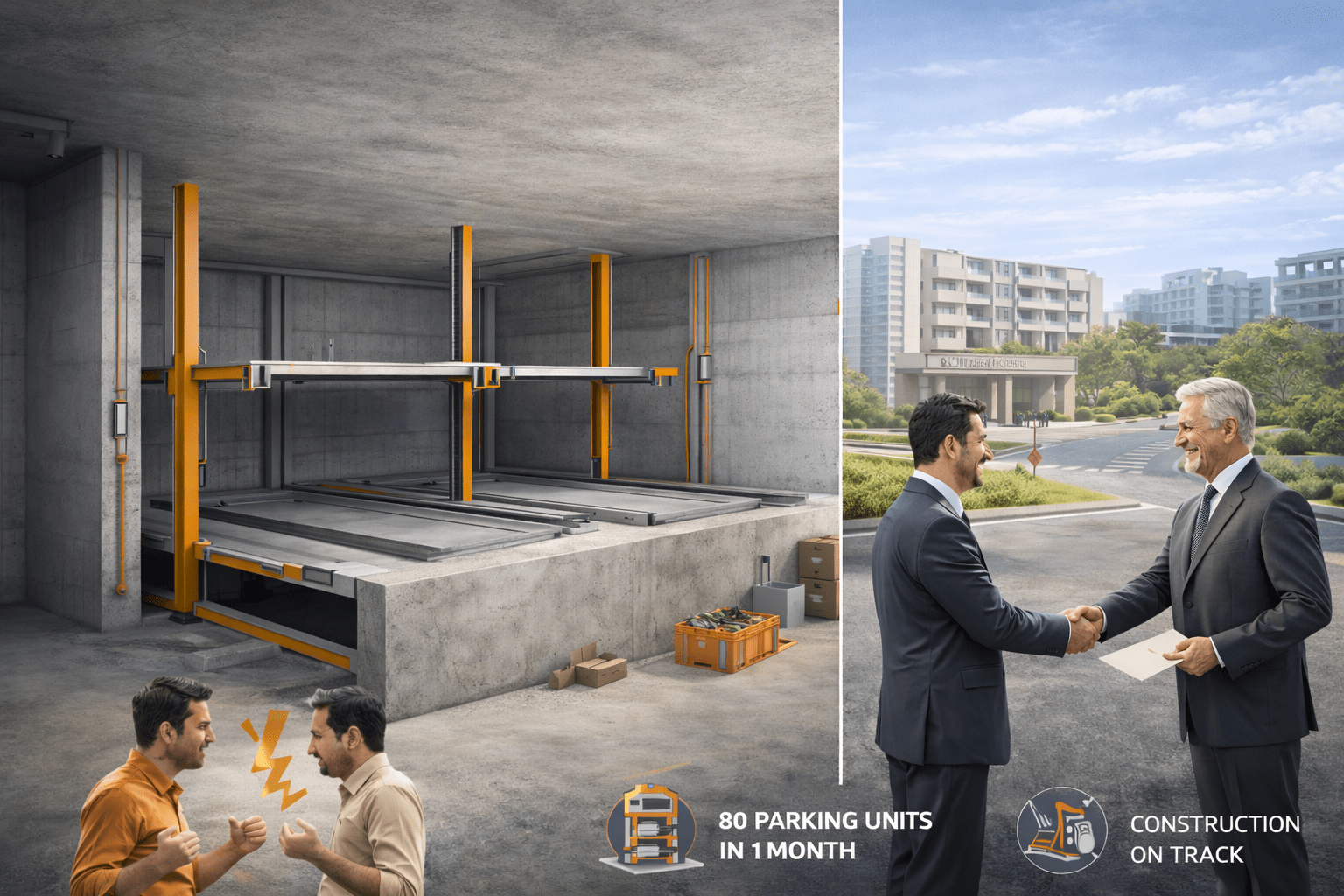
This matters most at 8 in the morning. In a dependent system, a resident who is late for work has to find the neighbour whose car is parked below. In a society with 60 flats, that phone call happens every day. That is the single biggest reason Indian developers choose puzzle parking over stack parking for resident parking.
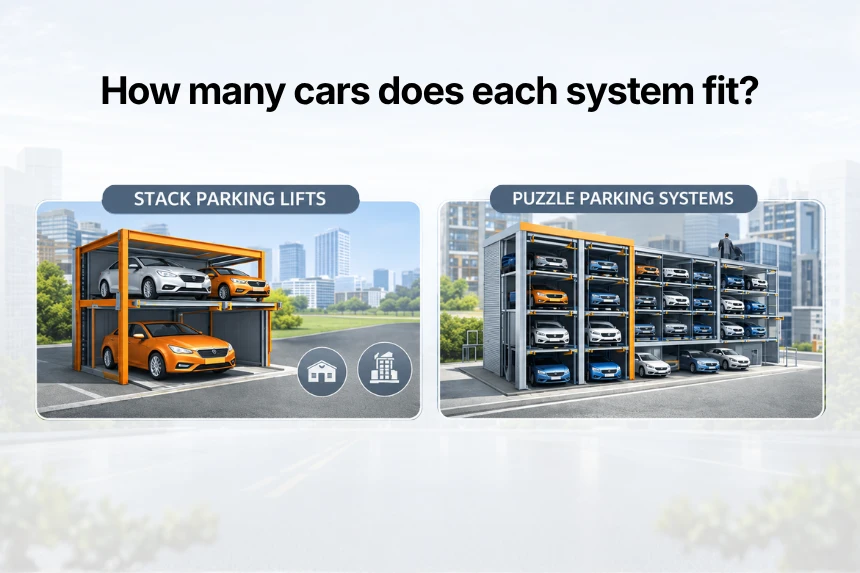
How many cars does each system fit?
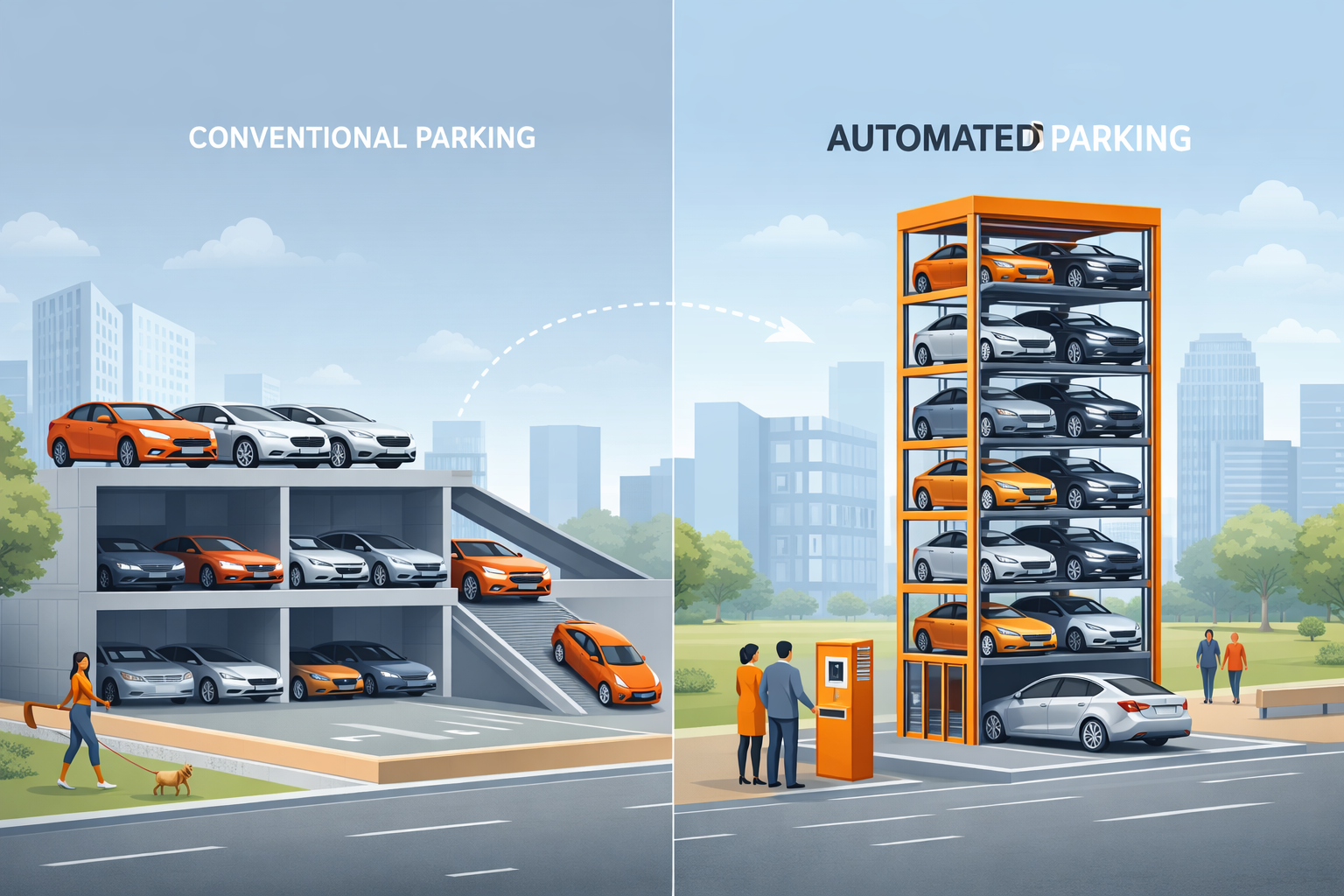
Capacity is where puzzle parking vs stack parking stops being close. Both systems use the height of your building instead of its floor area, but the gain depends on how many levels you can build.
- Stack parking turns one bay into 2 or 3. A row of ten bays becomes 20 or 30 cars.
- Puzzle parking fits about 3× the cars of open parking on the same footprint, and more on taller grids, because it also removes the driving aisles between rows.
The second point is the one people miss. Open parking spends a large part of the floor on ramps and aisles. A puzzle parking system needs only the ground row plus the space to drive in and out, so the saving is bigger than the level count alone suggests.
To see what your own plot holds, use the parking space calculator.
Stack vs puzzle parking cost in India: what drives the difference
A puzzle parking system costs more per car than a stack parking system. That gap is not a mark-up — it comes from real differences in what gets built.
- Number of motors and drives. A stack unit lifts one platform. A puzzle grid drives every pallet, up and sideways.
- The steel structure. Stack parking is a free-standing frame over one or two bays. Puzzle parking is a full structural grid across the whole parking area.
- Controls. Stack parking runs on a push-button panel. Puzzle parking needs a PLC, position sensors and safety interlocks.
- Civil work. A pit, a podium slab or a basement adds cost before the system arrives.
- Levels. Cost per car falls as you add levels, because the foundation is shared.
- Scope. Installation, commissioning, the AMC period and EV charging points all change the final figure.
Why we do not print a price here. Per-car cost changes with your level count, your soil and slab condition, and whether the system sits above ground or in a pit. A number without a site assessment is a guess, and quoting one would be dishonest. We give a line-item figure after a free site check.
For a wider view of pricing across system types, see our guide to mechanical parking systems.
Pit depth, headroom and what your site needs
This is usually the point where one system gets ruled out, and most comparison articles skip it.
- Stack parking needs height above the slab. If your stilt has a low beam soffit, a 2-level stack may not clear an SUV on the lower deck.
- Puzzle parking needs a grid area and, often, depth. A pit version buys you a level without raising the roofline, which is why it suits height-restricted societies.
- Column spacing matters. Puzzle parking works best on a clean, regular grid. Closely spaced or irregular columns cut the pallet count.
- Floor loading. Both systems concentrate load at the base frame, so the slab or foundation has to be checked by the structural consultant.
- Drainage and waterproofing. Any pit in an Indian basement needs a sump and proper waterproofing before the system goes in.
Exact minimums change by model. Clear height, pit depth and grid size depend on the configuration and the vehicles you need to park. Send us your parking plan and we will mark the usable area and the level count on it.
Where depth is available but height is not, a pit parking system is often the answer. Our Kshitij Aria project is one example.
Running cost, AMC and what happens in a power cut
Buyers compare purchase price and forget the next ten years. The running picture is different from the buying picture.
- Stack parking is cheaper to maintain. Fewer moving parts means a smaller annual maintenance contract and fewer service calls.
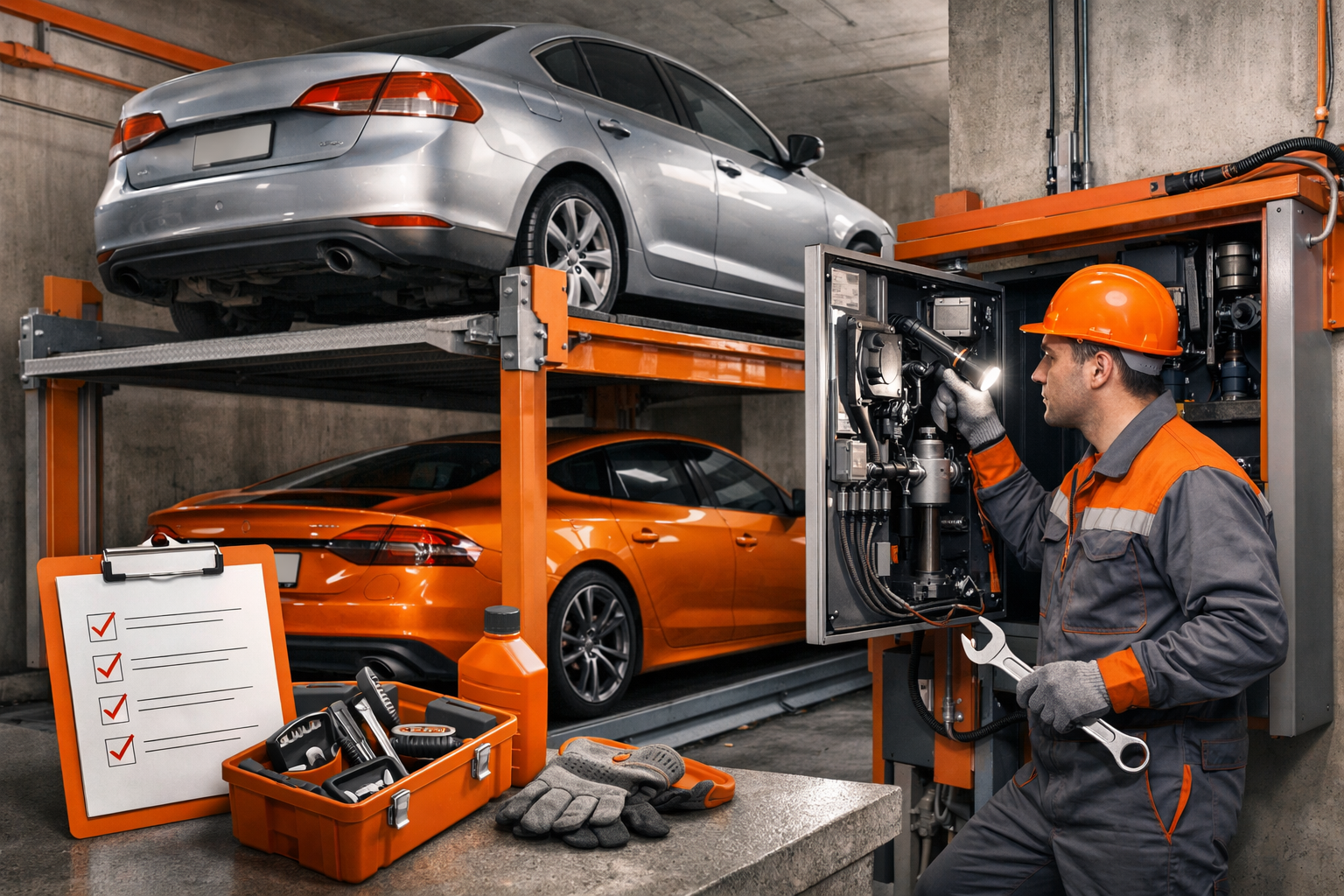
- Puzzle parking needs a proper AMC. Pallet rollers, chains, sensors and the controller all need scheduled checks. Skipping the AMC is the main reason these systems get a bad name.
- Power use is small either way. The motor runs only while a car is moving, which is a few seconds per trip.
- In a power cut, nothing falls. Both systems hold cars on mechanical locks, not on hydraulic pressure. Cars stay where they are until power returns.
- Ask about manual lowering. Check with your supplier how a car is brought down during a long outage, and who is trained to do it.
One question worth asking every supplier: who services the system after the warranty ends, and where do spare parts come from? A system with no local service team costs more over its life than a slightly dearer one that is properly supported.
Book a free parking consultation
You cannot pick between these two systems from an article alone. It depends on your plot, your column grid and your car count. We check that for you before you spend anything.
- A layout feasibility check on your own parking plan
- How many cars your plot can actually hold, level by level
- The right system for your project, with a line-item quote
Or try the parking space calculator to get a rough car count in a minute.
Which system suits your building?
In puzzle parking vs stack parking, the right answer changes with who uses the parking, not with the size of the project.
Residential projects and builders
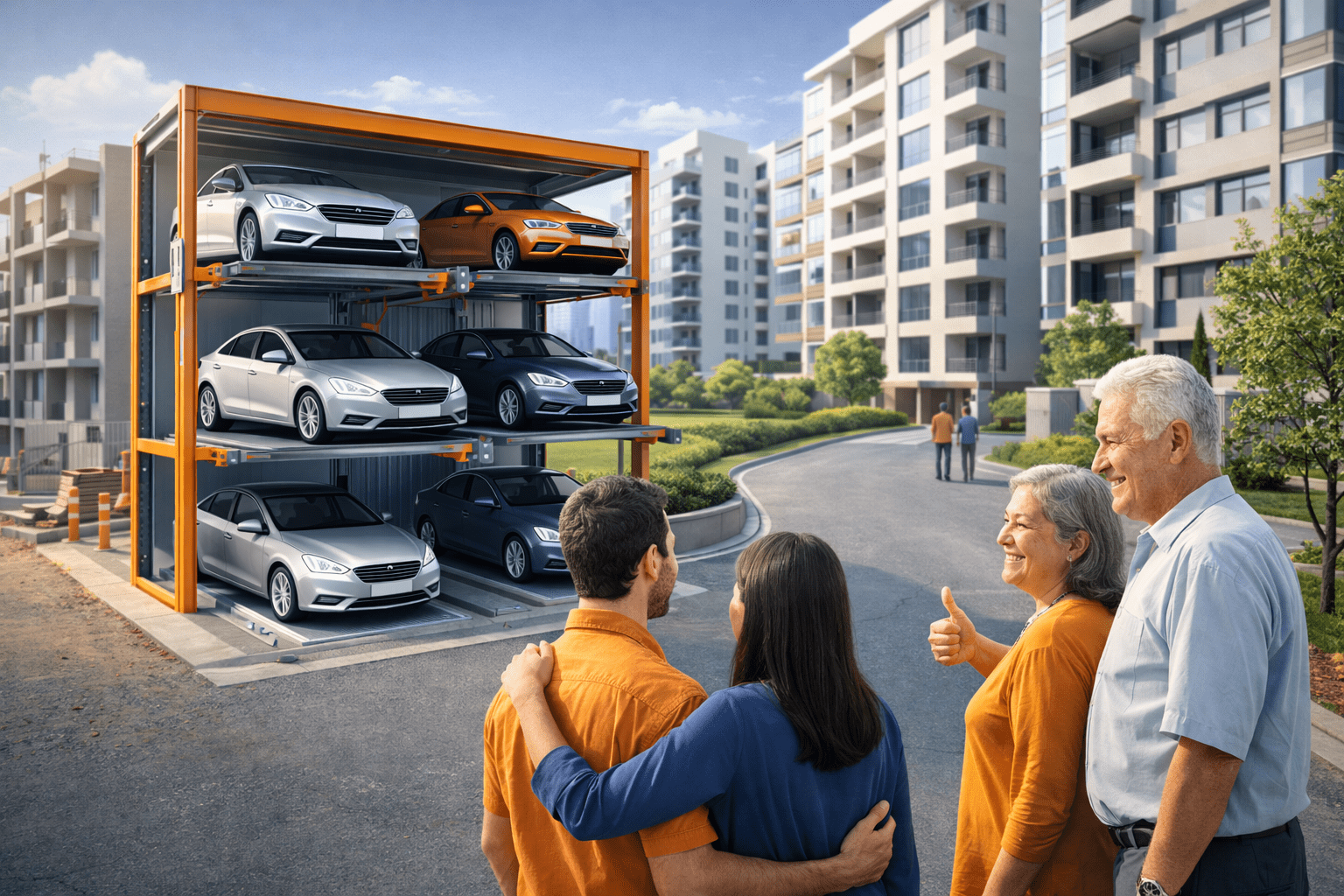
Every slot belongs to a different flat. Dependent parking creates daily disputes and slows handover.
Puzzle parkingHousing societies and RWAs
Retrofitting an existing stilt. Puzzle parking if slots are owned individually; stack parking where one family holds both cars.
Depends on ownershipOffices, malls and hospitals
Visitors and staff park and leave at different times. Nobody can be asked to move a stranger’s car.
Puzzle parkingVillas and private homes
One family, two or three cars, one driver. Dependent access is not a problem here.
Stack parkingHotels and valet parking
A trained valet moves every car, so shuffling is part of the job and costs nothing extra.
Stack parkingArchitects and consultants
Fix the column grid and the clear height first. Those two numbers decide the level count before any system is chosen.
Check the grid firstWhich is better, puzzle or stack parking? The rule
Most articles on puzzle parking vs stack parking end on “it depends”. Here is the actual rule we use on site.
Ask one question: will the two cars in a bay belong to the same person? If yes, stack parking is enough. If no, you need puzzle parking. Everything else is detail.
Choose stack parking if…
- One family or one user owns both cars in the bay
- A valet or driver is always on duty
- You have headroom but no depth for a pit
- The budget per car is the deciding constraint
- You need 2 or 3 cars per bay, not more
Choose puzzle parking if…
- Each slot belongs to a different flat or owner
- Cars come and go at unpredictable times
- You need more than 3 cars per footprint
- You must hit a parking count for approval
- Visitors or the public will use the parking
A third option is common and often the cheapest overall: use puzzle parking for resident and visitor slots, and stack parking for staff, drivers or second cars of the same flat. You pay the higher per-car cost only where independent access is genuinely needed.
Can you upgrade from stack parking to puzzle parking later?
Sometimes, but plan for it now rather than hoping later. A stacker is a free-standing frame, so removing it is straightforward. The hard part is the space it leaves behind.
- Height and depth are the blockers. A puzzle grid usually needs more clear height, or a pit that was never cast.
- Column grid decides the pallet layout. A stilt laid out for stackers may not divide cleanly into puzzle bays.
- Power and drainage. A larger system needs a bigger supply, and any pit needs a sump.
- The practical route is to leave a pit provision or a clear grid area in the drawing today, even if you install stack parking first.
Retrofits into occupied buildings are their own problem. We cover them in retrofitting parking elevators in existing infrastructure.
Approvals and parking norms in India
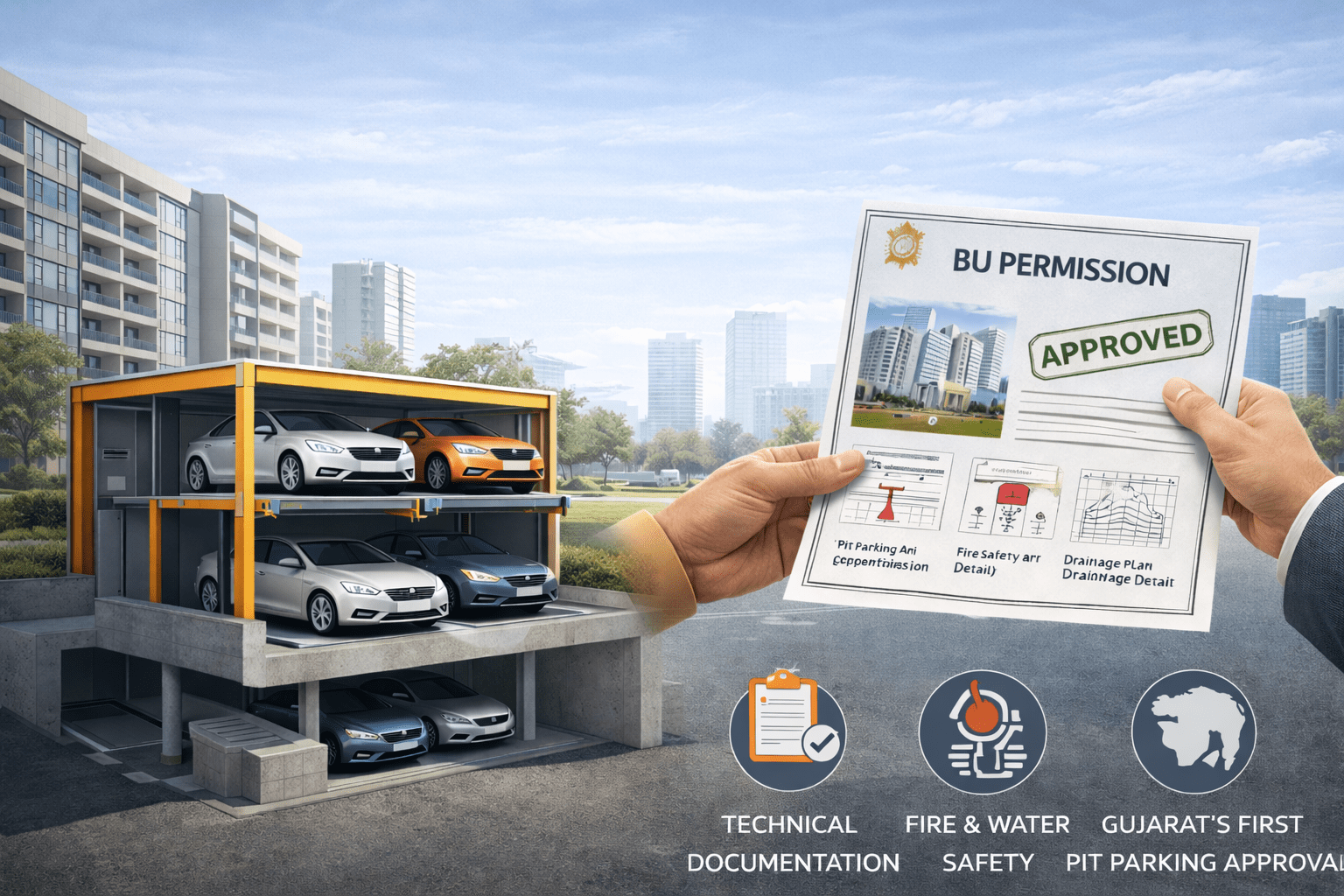
For a developer, the choice is often settled by the approval file rather than by preference. Local authorities set a minimum number of parking spaces for the built-up area of a project, and the building use certificate depends on meeting it.
Two points matter when you compare the systems:
- Some authorities count dependent slots differently. Where stacked or dependent parking is not counted at full value, a stack parking system may not close your shortfall even though it physically holds the cars. Rules vary by state and municipal corporation, so confirm the position with your local authority or liaison architect.
- Buyers and RERA disclosures. Parking allotment has to be disclosed to buyers. Dependent slots allotted to two unrelated flats are a common source of complaints after possession.
National guidance on building requirements sits with the Bureau of Indian Standards through the National Building Code, and urban parking policy with the Ministry of Housing and Urban Affairs. Local development control rules always take precedence.
Where this becomes urgent: most projects discover the shortfall at the BU permission stage, not at design stage. i-CUBE has closed that gap for projects like Solitaire Connect, which obtained BU permission within one month.
Frequently asked questions
What is the main difference between puzzle parking and stack parking?
Direction of movement. A stacker moves a car only up and down, so the lower car blocks the upper one. A puzzle system moves pallets sideways as well, so it can open a path to any car and bring it out on its own. In a puzzle parking system vs stack parking system comparison, every other difference — cost, capacity, civil work, maintenance — follows from that one point.
Is puzzle parking more expensive than stack parking?
Yes. A puzzle parking system costs more per car than a stack parking system because it needs more motors, a full steel grid, sensors and a controller, and it usually needs a pit or a podium slab. The gap narrows as you add levels, because the foundation and structure are shared across more cars.
Which is safer, puzzle parking or stack parking?
Both are safe when they are built and maintained properly. Each uses mechanical anti-fall locks that hold the platform even without power, plus photo-electric sensors that stop movement if something is in the way. Puzzle parking adds position sensors and interlocks because more parts move. The real safety variable is the annual maintenance contract, not the system type.
Can an SUV fit in a stack parking system?
Yes, if the unit is rated for it. i-CUBE builds stack parking with load ratings of 2,000 kg, 2,500 kg and 3,000 kg, which covers sedans and SUVs. The limits that catch people out are height and wheelbase, not weight, so give your supplier the exact models you need to park.
Which is better for an apartment society, puzzle or stack parking?
In most societies, puzzle parking. Slots belong to different flats, so a dependent system means residents have to call each other to move cars. Stack parking still works well in a society where one family holds both cars in a bay, or for staff and second-car parking.
What is dependent parking?
Dependent parking means one car has to be moved before another can come out. Stack parking is a dependent parking system, because the lower car blocks the upper one. Independent parking, such as puzzle parking, lets any car leave without moving another.
How long does it take to get a car out of a puzzle parking system?
You enter your slot number and the system does the rest, moving pallets aside and lowering your car to the entry level. It takes longer than walking to a car in open parking, and no longer than waiting for a lift in a tower. Exact retrieval time depends on the grid size and where your pallet sits, so ask for the figure for your specific configuration.
What happens to the cars during a power failure?
Nothing moves and nothing drops. In both systems the car rests on mechanical locks or on a pallet held by the structure, not on hydraulic pressure. Retrieval waits until power returns. Ask your supplier how a car is lowered manually during a long outage and who on site is trained to do it.
How much space does a puzzle parking system need?
It needs the footprint of the ground row plus room to drive in and out. Each level above or below multiplies that footprint. Because there are no internal ramps or aisles, the total area is smaller than conventional parking for the same car count. The exact area depends on your column grid, so it has to be marked on your own plan.
Can stack parking and puzzle parking be used in the same building?
Yes, and it is often the most economical plan. Many Indian projects use puzzle parking for resident and visitor slots, where independent access matters, and stack parking for staff, drivers or a flat’s second car. You pay the higher per-car cost only where it is actually needed.
How long does installation take?
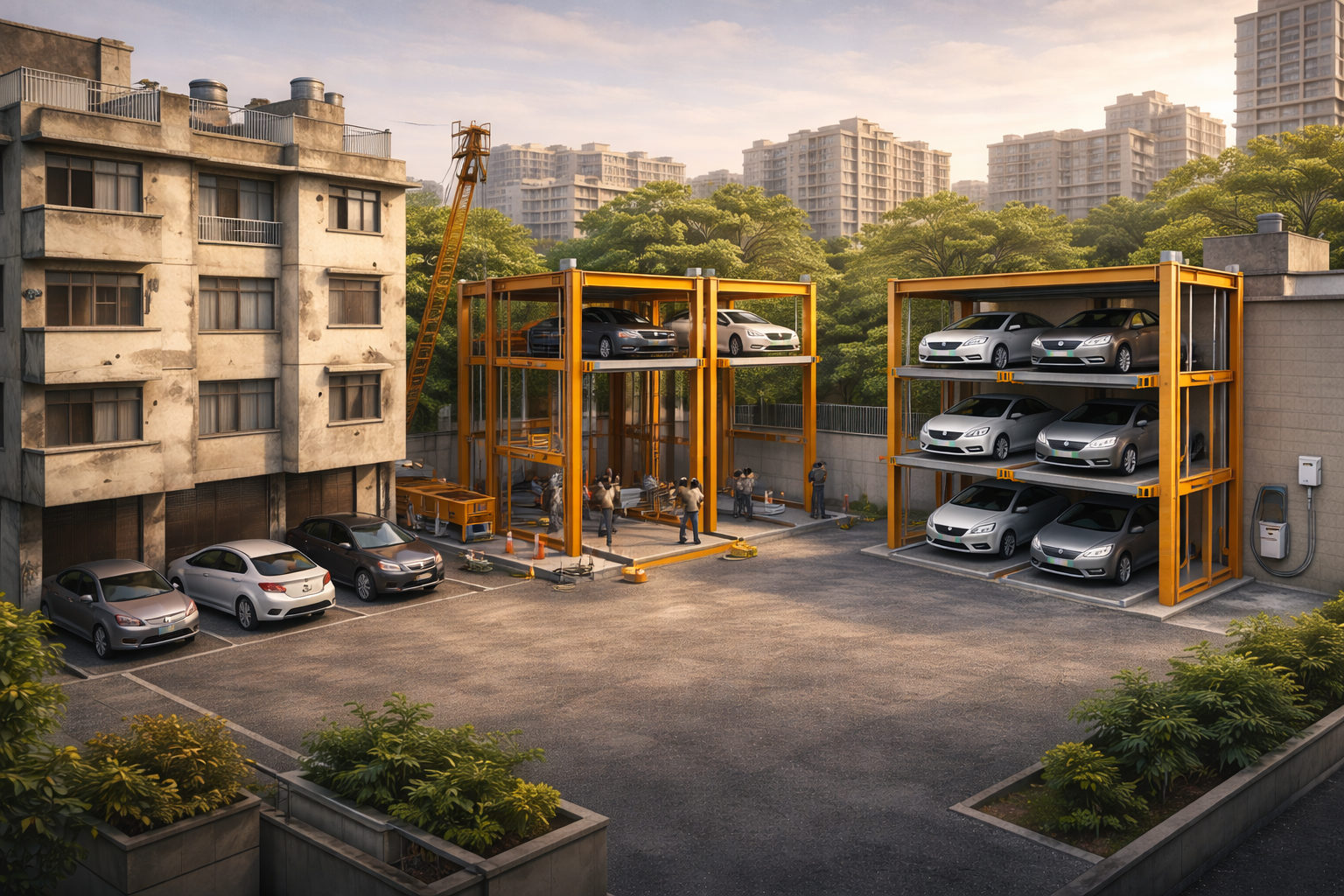
Both are far quicker than building conventional parking, because the structure is fabricated off site and assembled on site. Stack parking is the faster of the two, since it needs little civil work. A puzzle system takes longer where a pit has to be cast and cured first. Confirm the schedule for your project size with i-CUBE, since timelines depend on civil readiness.
Sources and references
- Bureau of Indian Standards — National Building Code of India. bis.gov.in
- Ministry of Housing and Urban Affairs, Government of India — urban transport and parking policy. mohua.gov.in
- i-CUBE Parking Elevators — published product specifications for stack and puzzle parking systems.
Still not sure which system your project needs?
Send us your parking plan. We will mark the usable area, tell you how many cars it holds, and recommend puzzle or stack parking with a line-item quote. No cost, no obligation.