Integrated with Parking EV Charger
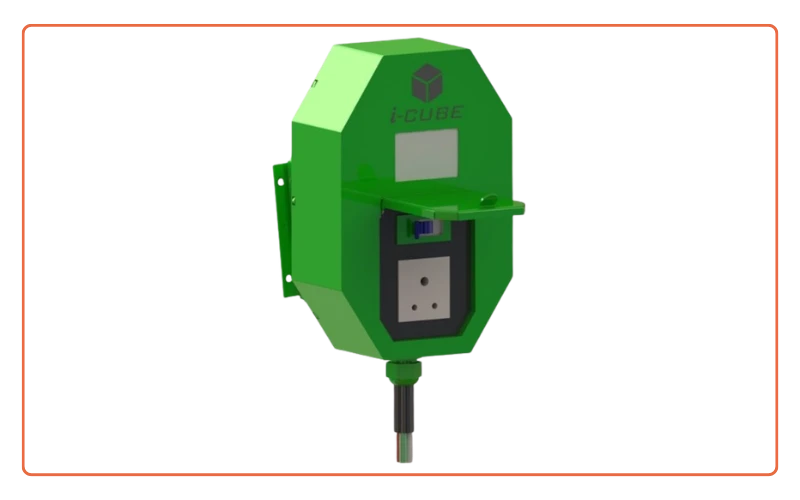
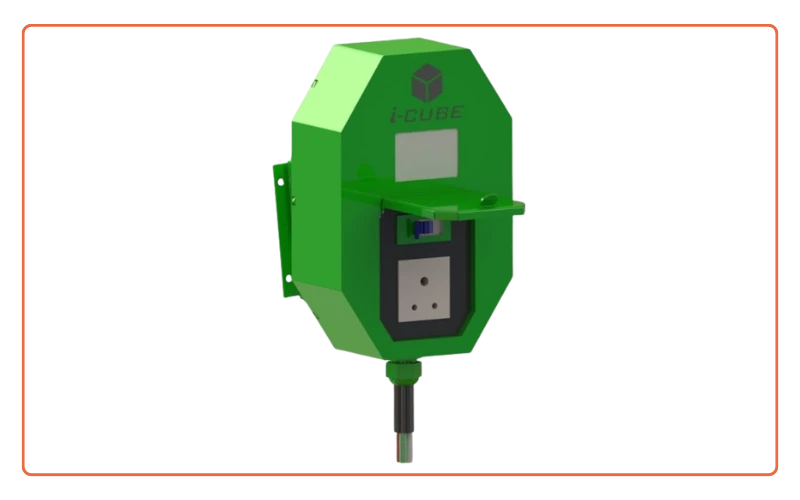
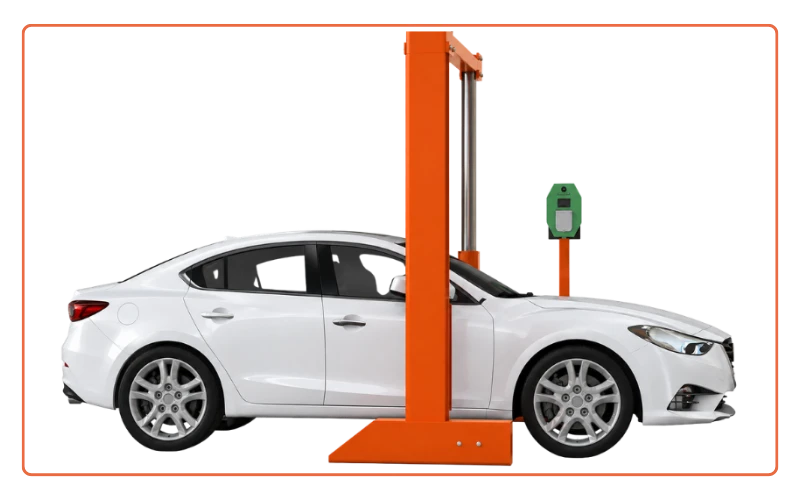
Built into the parking system itself, so the car charges on its pallet while it is parked. RFID access, weatherproof casing, and a timer that cuts off automatically.
i-CUBE supplies EV charging solutions from 3.3 kW to 60 kW for homes, housing societies and commercial buildings across India — and, because we build the parking systems too, we are one of the few electric vehicle charging solutions suppliers who can charge a car while it sits inside a stack, pit or puzzle parking system.
New building, or adding chargers to an existing one — both are covered.
EV charging solutions have moved from a selling point to an approval condition. Building rules across India now ask for a share of parking to be EV-ready, and the load has to be sanctioned before the building is signed off — not after residents start buying electric cars.
The Model Building Bye-Laws amendment from the Ministry of Housing and Urban Affairs asks that 20% of parking spaces in new buildings be fitted for EV charging.
The building has to carry additional load equal to every charging point running at the same time, with a 1.25 safety factor applied. That number belongs in the electrical drawings, not in a later retrofit.
Gujarat is amending its development control regulations to require charging facilities in buildings, Haryana notified it for new and renovated buildings, and Maharashtra requires it in all new residential buildings.
Buyers with an electric car now ask about charging before they book. A project that cannot answer the question loses the enquiry to one that can.
EV charging solutions are the charging points installed where vehicles park, the wiring that connects them to the building’s power supply, and the controls that decide who may charge, for how long, and who pays for the units used. A charger on its own is only the visible part — the cabling, the load planning and the access control are what make electric vehicle charging solutions work safely.
Charging is rated in kilowatts (kW). Lower ratings such as 3.3 kW and 7 kW charge slowly and suit a car parked overnight. Higher ratings such as 22 kW and 60 kW charge much faster and suit offices, malls and public sites where a vehicle stops only briefly. Most electric car charging solutions in Indian buildings sit at the lower end, because cars stay parked long enough for slow charging to do the job.
3.3 kW to 22 kW. Uses the building’s normal supply, costs less to install, and fits homes, societies and workplaces where cars stay parked for hours.
Up to 60 kW in our range. Needs a heavier connection and more space, and suits commercial, highway and public charging where turnaround time matters.
Three EV charging solutions, chosen by where the vehicle parks and who pays for the power.
Built into the parking system itself, so the car charges on its pallet while it is parked. RFID access, weatherproof casing, and a timer that cuts off automatically.
A pay-as-you-charge station for shared and public use. Available in 3.3 kW, 7 kW, 22 kW and up to 60 kW, with over-voltage, under-voltage and surge protection.
A compact standalone unit for a single home or a small commercial bay. Short-circuit and leakage protection, weatherproof build, and Bluetooth or Wi-Fi monitoring.
Most EV charging solution providers install chargers in open bays. They stop where mechanical parking begins, because a car on a moving pallet two levels up cannot simply be plugged into a wall socket. i-CUBE builds the parking system, so EV charging solutions are planned into it from the start.
Works only on the ground-level bays a person can walk up to.
The charge point travels with the pallet, so any level can charge.
Works across our range. Charging can be planned into a stack parking system, a puzzle parking system, a pit parking system, a tower parking system or a rotary parking system.
From the first site visit to a working charge point, this is how we install EV charging solutions in a building.
We measure the sanctioned load, look at the existing panel and see how much spare capacity the building actually has.
How many charge points, at what kW, and which parking bays or pallets they serve. This is where the 20% rule is answered.
Cable routes, protection and metering are drawn for the parking layout — including pallets, where the system is mechanical.
Chargers are mounted, wired and tested for earthing, leakage and safe cut-off before anyone uses them.
RFID cards or the mobile app are configured so only authorised users can charge, and the units are counted per user.
Residents or facility staff are shown how it runs, and the units are covered under our service and AMC terms.
The same controls come built into every unit, whichever of our EV charging solutions you choose.
Only registered users can start a charge, so outsiders cannot draw power from your supply.
Charging stops on its own once the set time is reached, which keeps energy use in check.
Bluetooth and Wi-Fi connectivity lets users start, stop and monitor a charge from a phone.
A multi-colour indicator shows on or off status and charging progress at a glance.
Over-voltage, under-voltage and surge protection guard both the charger and the vehicle.
The unit powers down when it is not in use instead of drawing standby load all day.
Rated for outdoor or basement installation, including open podium and terrace parking.
The same installation serves scooters, three-wheelers and cars, so one system covers the whole society.
EV charging solutions are not one product. The right charger depends on who parks there, how long they stay, and who pays the bill.
Get the EV-ready share of parking and the sanctioned load right at drawing stage, so charging never becomes an approval query late in the project.
See our parking consultancy →Add charging to a building that was never designed for it. Prepaid units solve the argument over who pays, because each resident is billed for the units they use.
See prepaid EV chargers →Higher-rated electric vehicle charging solutions suit short stays, and prepaid billing turns the parking level into a service visitors will pay for rather than a cost centre.
See multi level car parking →The simplest of our electric car charging solutions — a single independent charger on the wall of the porch or garage, sized to the car and the existing house connection.
See the independent charger →Guests and attendants park for hours, so standard charging on a share of the bays covers demand without a heavy new connection.
See automated parking systems →EV charging station solutions for public sites, fleet depots and two-wheeler parking, where every user is billed individually through the prepaid unit.
See two-wheeler parking →Most buildings do not know what their spare electrical capacity actually is. We check it on site first, then tell you how many charge points it will carry — before anyone talks about a quotation.
Planning the parking too? Try the parking space calculator to see how many cars your plot holds.
These are the three reasons electric vehicle charging solutions stall in Indian buildings. They are worth settling before you buy anything.
Not if the load is planned. We start from your sanctioned load and the spare capacity in the panel, then fix the number of points and their ratings to fit. Where capacity is short, lower-rated chargers on more bays often work better than a few fast ones.
Fire safety is the usual objection, and it is a fair one. Our units carry short-circuit, leakage, over-voltage and surge protection with automatic cut-off, and installation is planned with the building’s fire layout.
This is what stops most society installations. A prepaid charger settles it — each user pays for the units they draw, so the cost never lands on common maintenance, and RFID access stops non-residents using the point.
No supplier can quote EV charging solutions from a phone call, because the charger is often the smaller half of the cost. These are the things that move the number.
A 3.3 kW unit and a 60 kW unit are different products with different power requirements.
Cost per point falls as the count rises, because cabling and protection are shared.
If the sanctioned load has to be raised, that is a separate cost with the utility.
Distance from the panel to the bays, trenching, conduits and panel changes.
Metering, RFID and app billing add hardware that a plain charger does not need.
Charging inside a mechanical parking system needs cable management designed for a moving pallet.
We quote after a site visit, not before. Once we have seen the panel, the parking layout and the number of bays you want covered, you get a line-item quotation with nothing hidden in it.
We are a parking systems manufacturer that also supplies EV charging — not an EV charging solutions company that has never built a car park.
Charging and parking are designed together, by one supplier, so nothing is bolted on at the end.
A site and load check comes first. You get numbers based on your building, not a standard price list.
Certificate of Empanelment from CREDAI, 2023 — the developer body our clients already work with.
Based in Ahmedabad with project experience across India, so service does not depend on an overseas principal.
Chargers and parking systems are covered by the same service team, so one call handles both.
Our parking consultancy team handles layout, demand and approvals alongside the equipment.
EV charging solutions are the charge points installed where vehicles park, the wiring connecting them to the building’s supply, and the controls that manage access, timing and billing. i-CUBE supplies these electric vehicle charging solutions from 3.3 kW up to 60 kW, as standalone units, prepaid stations, or chargers built into a mechanical parking system.
The Model Building Bye-Laws amendment asks for 20% of parking spaces in new buildings to be EV-ready, and several states have gone further — Maharashtra requires it in all new residential buildings, and Haryana notified it for new and renovated buildings.
Yes. This is the main thing that separates us from other EV charging solution providers. Because we manufacture the parking system, the charge point can be built into the pallet, so a car parked on an upper or pit level charges while it sits there. The number of EV-enabled pallets is fixed at design stage.
It depends on the charger rating, how many points you need, how much spare electrical capacity the building has, the cable run, and whether prepaid billing is included. We do a site and load check first and then give a line-item quotation, rather than quoting a figure that changes once we see the building.
Not if the load is planned properly. Building rules expect additional load equal to all charge points running at once, with a 1.25 safety factor. We start from your sanctioned load and spare panel capacity, and size the points to fit. Where capacity is tight, more low-rated chargers usually beat a few fast ones.
Our units include short-circuit, leakage, over-voltage and surge protection with automatic cut-off, and weatherproof casing suitable for basements. Fire-department clearance is a separate approval in most cities, and we will tell you what your local authority is likely to ask for.
A prepaid EV charger handles it. Each user pays for the units they draw on a pay-as-you-charge basis, so charging never gets loaded onto common society maintenance. RFID access means only registered residents can start a charge.
Electric car charging solutions are sized by how long the vehicle stays parked, not by battery size. For overnight charging at home or in a society, 3.3 kW or 7 kW is usually enough. For offices, malls and showrooms where cars stop for a couple of hours, 22 kW suits better. Public and fleet sites go up to 60 kW.
Yes, and retrofitting EV charging solutions into an existing building is the most common request we get. The work is decided by what spare electrical capacity exists and how far the bays are from the panel. Existing mechanical parking can often be retrofitted as well, depending on the system model and site conditions.
Yes. Our chargers support 2, 3 and 4 wheelers, and are compatible with standard 3-pin plug types used in India, the US and Europe. That means one installation can serve scooters, three-wheelers and cars in the same society or commercial building.
Yes. The prepaid range works as a public or semi-public charging station, in 3.3 kW, 7 kW, 22 kW and up to 60 kW, with individual billing, remote monitoring and mobile app access for users.
We are based in Ahmedabad, Gujarat, and supply EV charging solutions India-wide, with parking projects already delivered across the country. Call +91 87349 33641 or use the enquiry form.
Tell us about the building and the parking, and we will check what your supply can carry before we quote anything.
Share your site, parking type, charger requirement and project stage. Our team will review the requirement and contact you with the next practical step.