26 February 2026
Stack vs Suspended Parking: Which One Do You Need?
Urban land is getting expensive. Reports show that parking space requirements in major cities can occupy up to 40% of a building’s total area. The requirement to build parking spaces results in significant expenses for builders and developers who need to create additional sellable or leasable space on their properties.
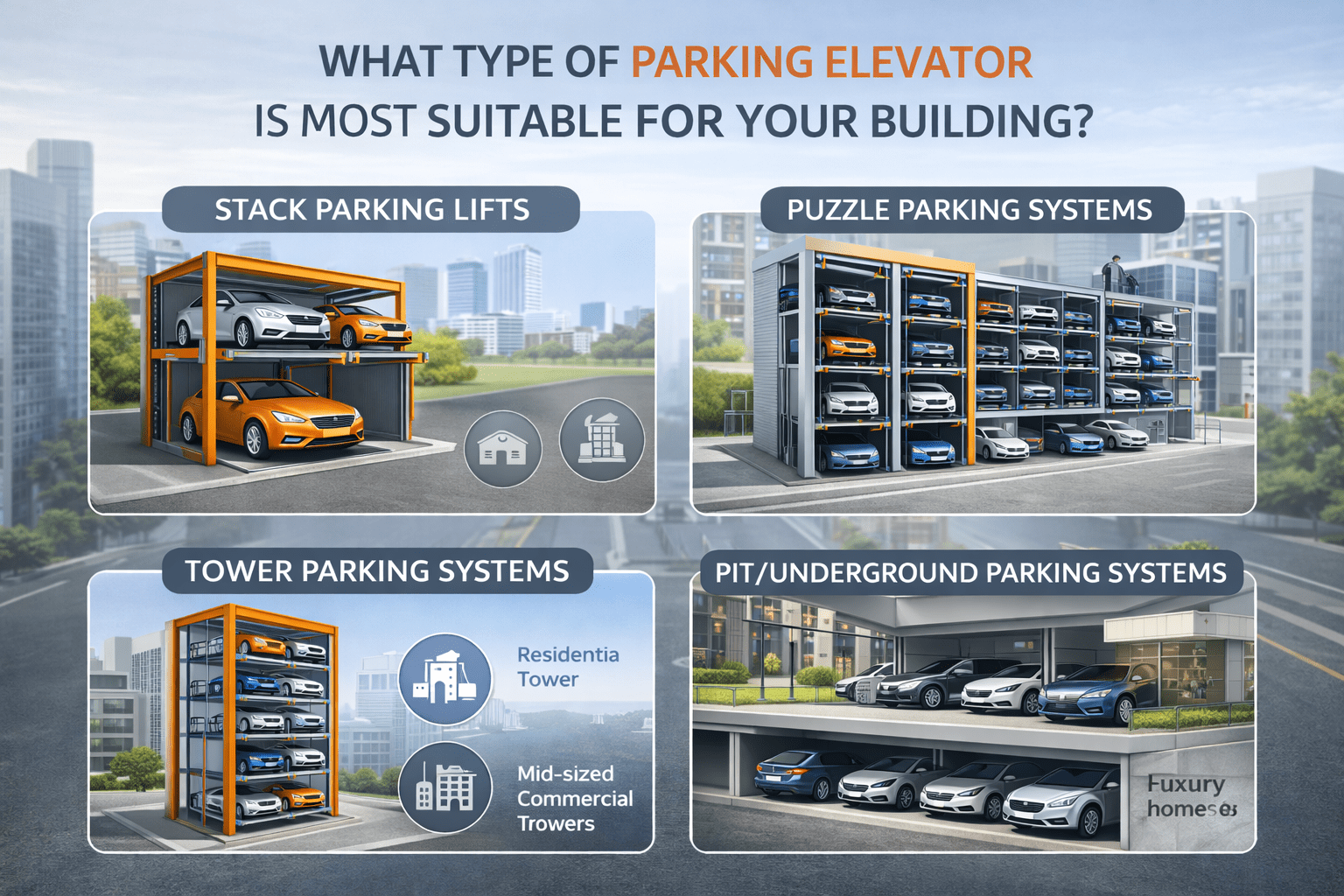
The success of builders, firms, and architects depends on their ability to develop effective smart parking solutions. Understanding the difference between parking systems helps managers pick a better path for the whole build. In this blog post, we will explore two popular parking systems: Stack and Suspended Parking.
The assessment process begins with three elements: available footprint, building height limits, and user demand. The parking system needs to match project objectives, which include density requirements, budget limits, and user ease of access.
What Is Stack Parking?
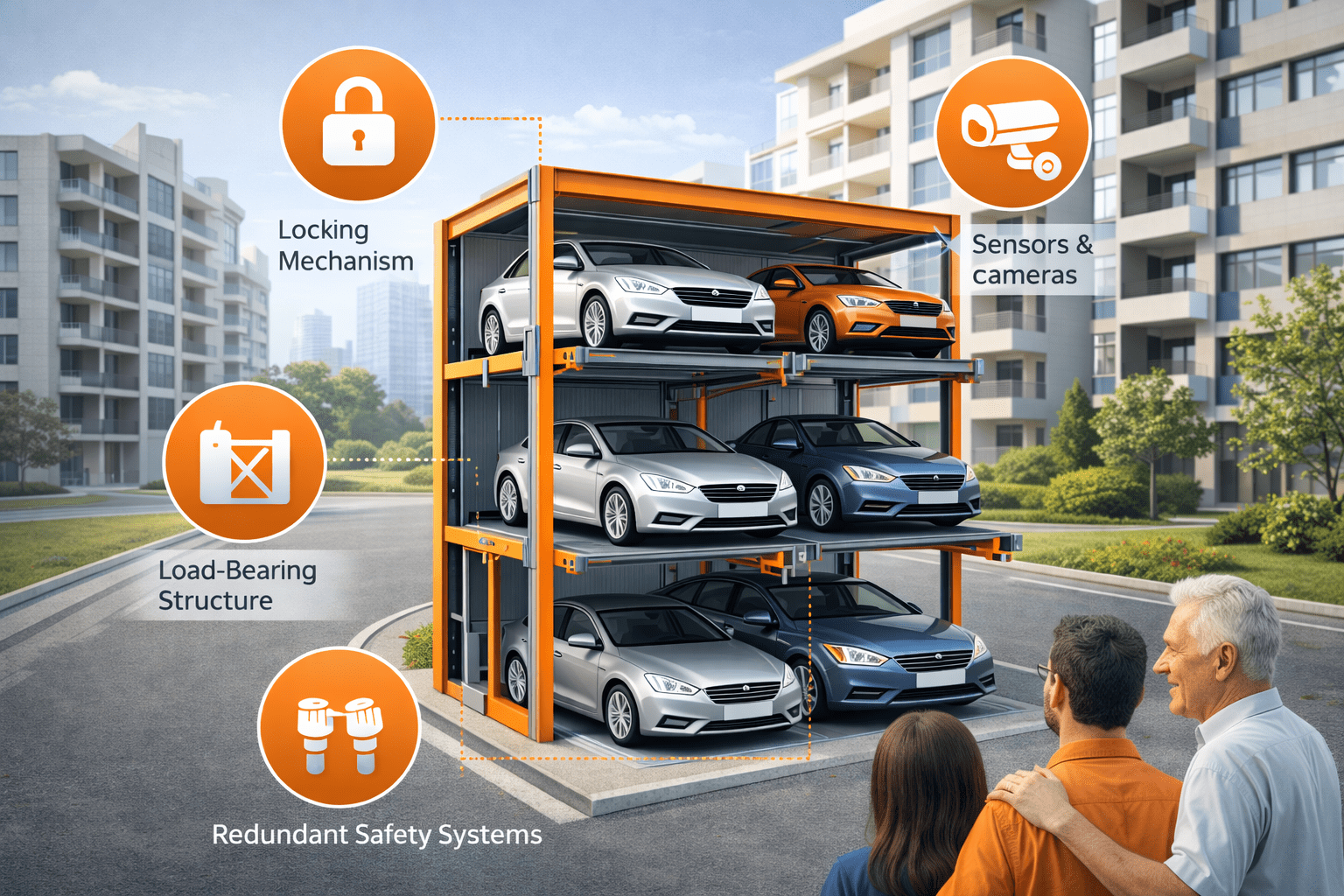
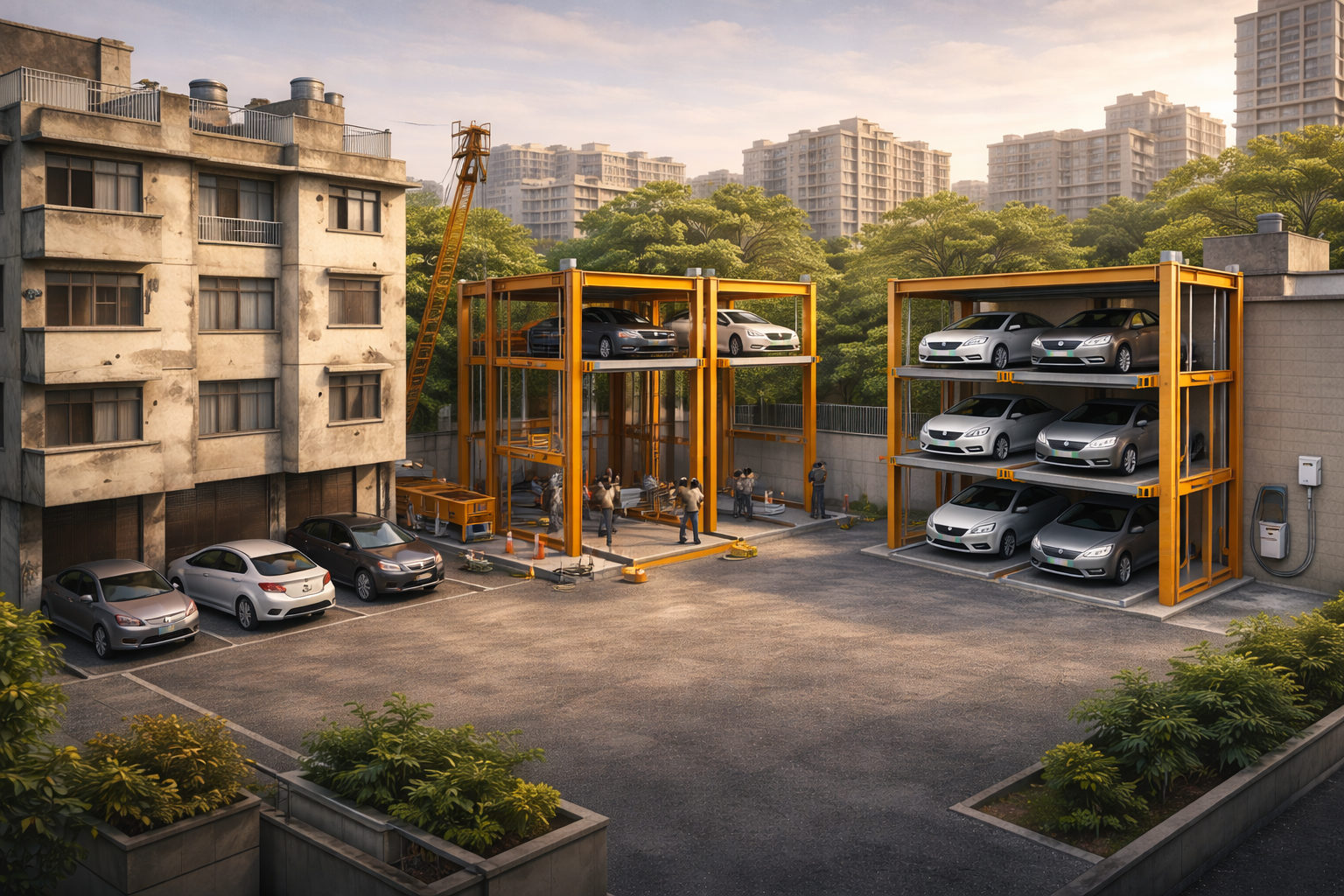
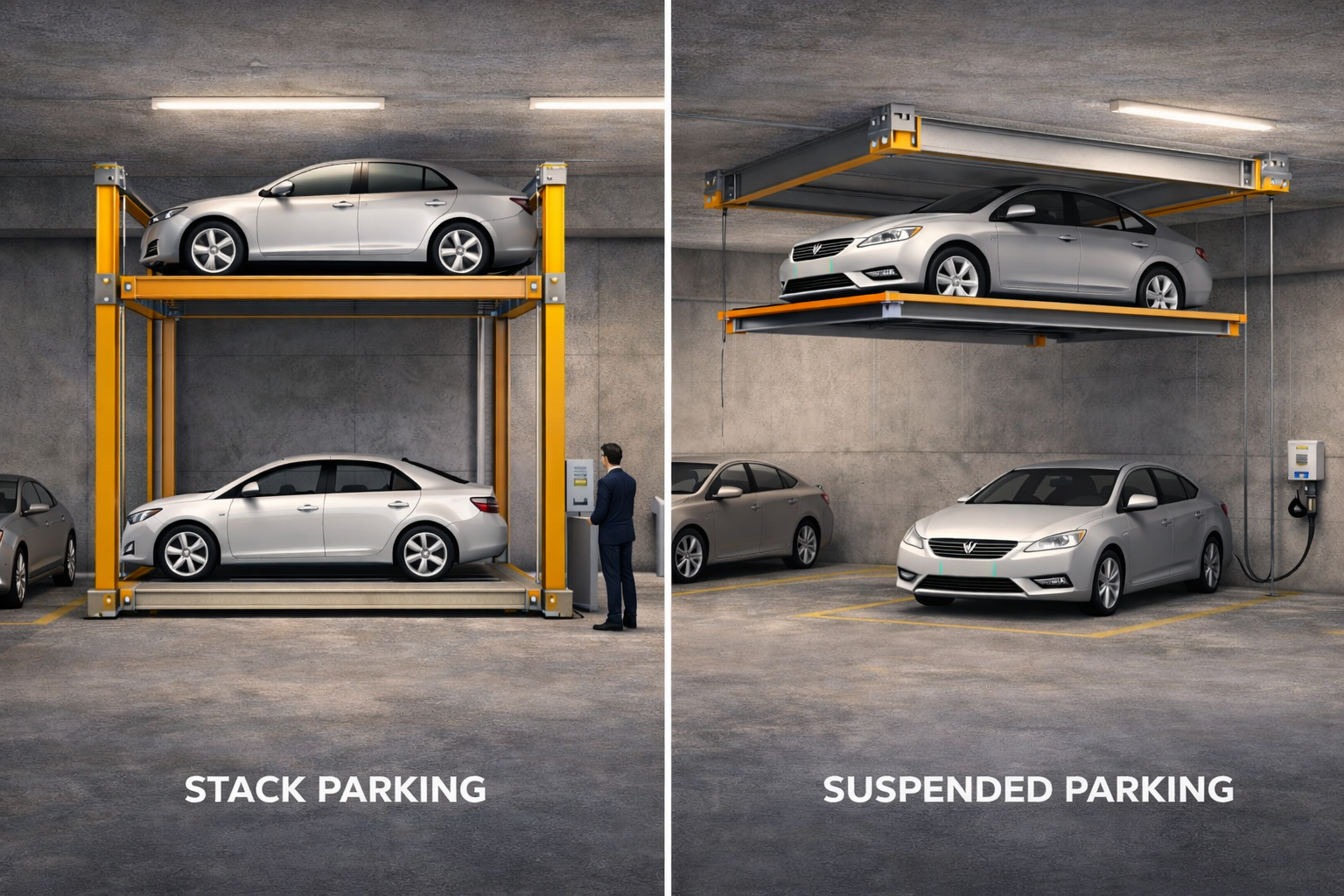
The floor-mounted platform lifts one vehicle vertically to create a second parking space.
- Structure: The parking lift uses two or four strong vertical posts fixed to the floor.
- Best suited for: Home garages, smaller apartment blocks, and regular basement pits.
- Key advantage: Affordable pricing with a quick, hassle-free installation process.
- Limitation: Most setups mean dependent access; the bottom car has to leave before the top one can.
What Is Suspended Parking?
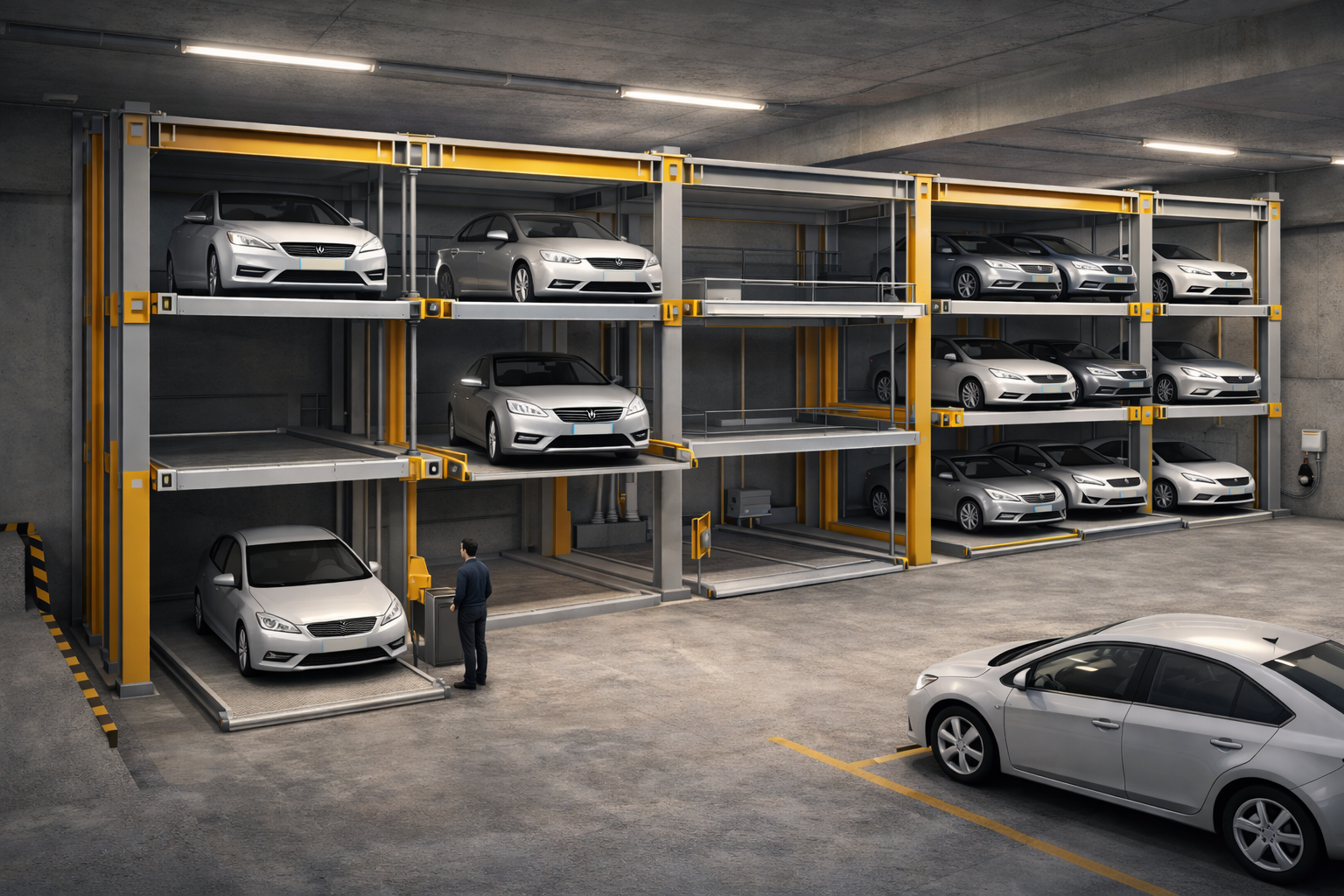
Suspended parking uses overhead beams to hold platforms that only lower when a car needs to drive on, so no floor posts are required.
- Structure: Everything hangs from the ceiling or overhead supports.
- Best suited for: Cramped spaces, valet parking areas, upscale spots, or really packed buildings.
- Key advantage: Leaves the whole area underneath wide open for driving or walking.
- Limitation: Runs higher in price because of the stronger structure needed.
How to Choose the Right System
Your pick comes down to a few main things:
- Budget: Stack setups save you money right away.
- Floor Space Requirement: Suspended parking systems give you full use of everything underneath.
- Access: Stack parking is dependent, which means you must move the bottom car to access the one on the top. In contrast, suspended parking is primarily dependent but can be designed to be independent, allowing you to lower the platform without moving the car parked below.
Smart Parking Decisions for Modern Spaces
Parking systems shape land use efficiency and project profitability. Stack systems suit compact projects, while suspended systems support high-density developments with vertical expansion potential.
Note: For high-traffic commercial projects, puzzle parking may also be an ideal choice as compared to standard systems, as it moves cars both vertically and horizontally for independent access.